




| Quantity: | |
|---|---|


DS-1140
PYTHON
390690
Slightly Hazy
<2
H-Z
40±2
3-6
TOL/MEK
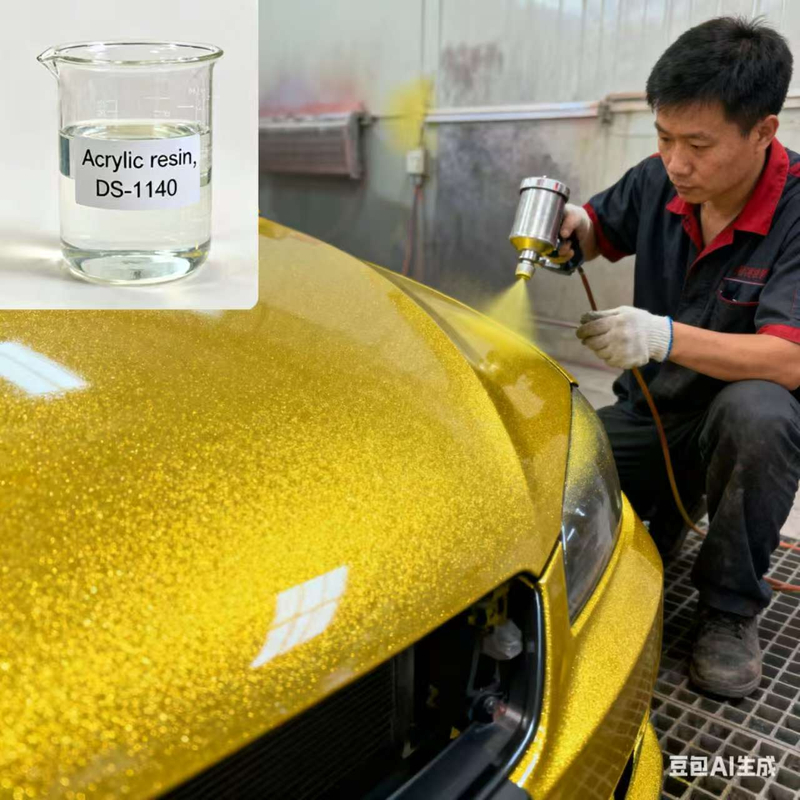
DS-1140 resin is a copolymer synthesized through the graft copolymerization of (meth)acrylate monomers and specialized monomers onto chlorinated polypropylene, utilizing toluene and methyl ethyl ketone (MEK) as solvents. This resin exhibits excellent adhesion to the vast majority of PP substrates (eliminating the need for a PP adhesion promoter) and is suitable for the formulation of solid-color paints.
The Anti-Corrosion Silicon-Modified Acrylic Resin presents itself as a slightly hazy, viscous liquid with a distinct, sharp solvent scent characteristic of its toluene and methyl ethyl ketone (MEK) base. When poured, the fluid exhibits a smooth, syrupy flow, accurately reflecting its precise H-Z viscosity parameters. Upon application and curing, it transforms into an exceptionally uniform and tough film that feels rigid yet remarkably flexible to the touch. This advanced thermoplastic material is synthesized through the sophisticated copolymerization of (meth)acrylates and specialty monomers, which are meticulously grafted onto chlorinated polypropylene. By integrating silicon-modified anti-corrosion properties, the resulting matrix forms a dense, impenetrable barrier against moisture, chemical exposure, and severe environmental degradation.
Formulators and production engineers will appreciate the seamless integration of this resin into existing manufacturing lines. The solution rapidly wets out pigments and fillers, leaving behind a flawless, high-gloss finish that fundamentally upgrades the visual and tactile quality of automotive components. Because it demonstrates exceptional adhesion to the vast majority of polypropylene substrates, it requires no additional adhesion promoters during application. This allows industrial paint formulators to directly create high-quality solid-color paints, streamlining the entire coating process while ensuring long-lasting, premium results on final assembled parts.
Parameter | Specification |
|---|---|
Appearance | Slightly Hazy |
Color | < 2 |
Viscosity (Grifler tube, 25℃), seconds | H-Z |
Solids content (150℃, 1h), % | 40±2 |
Acid value (solution basis, mgKOH/g) | 3-6 |
Glass transition temperature (theoretical value), ℃ | 40 |
Solvent | TOL/MEK |
Our advanced resin solution is engineered to solve the most persistent challenges in industrial plastic coating. By focusing on chemical synergy and structural integrity, this product delivers unmatched operational advantages for your production line.
One-Coat Basecoat Solution: Completely eliminates the necessity for separate adhesion promoters, significantly reducing material consumption and labor time on the factory floor.
Exceptional Drying Properties: The precisely balanced TOL/MEK solvent system ensures rapid evaporation, facilitating faster handling, stacking, and packaging of coated parts.
Superior Film Integrity: Once fully cured, the paint film exhibits outstanding water resistance and mechanical toughness, preventing peeling, flaking, or blistering under physical stress.
High Pigment Compatibility: Readily accepts a wide variety of industrial pigments, allowing for the creation of vibrant, high-quality solid-color paints with excellent dispersion stability.
Silicon-Modified Protection: Enhanced with silicon elements to provide an extra layer of anti-corrosion defense, dramatically extending the lifespan of the underlying substrate in harsh outdoor environments.
One of the most significant hurdles in automotive component manufacturing is achieving reliable, long-lasting adhesion on low-surface-energy plastics like polypropylene (PP). Traditional methods require extensive surface preparation, flame treatment, or the application of expensive adhesion promoters. This resin fundamentally changes the operational workflow by integrating the adhesion mechanism directly into the basecoat.
Primer-Free Application: Engineered with acrylic grafted chlorinated polypropylene, the molecular structure inherently bonds with PP substrates, creating a permanent chemical anchor without requiring a separate primer layer.
Substantial Cost Reduction: By removing the primer station from your painting line, you instantly reduce energy consumption, lower inventory requirements for secondary chemicals, and decrease overall manufacturing costs.
Enhanced Workflow Efficiency: The elimination of flash-off times associated with traditional primers translates to a much higher throughput rate, allowing your facility to process a greater volume of automotive bumpers per shift.
Automotive exterior parts are subjected to extreme environmental stressors, from freezing rain and corrosive road salt to intense UV exposure and physical abrasions. The protective coating must act as a resilient, unyielding shield. The integration of silicon-modified technology elevates the defensive capabilities of this acrylic resin far beyond standard formulations.
Advanced Anti-Corrosion: The dense cross-linking of the cured film prevents oxidative agents and moisture from penetrating the surface, safeguarding the structural integrity of the plastic component beneath.
Exceptional Water Resistance: The hydrophobic nature of the modified polymer chain ensures that water beads up and rolls off, preventing long-term degradation, blistering, or swelling of the paint film.
Mechanical Toughness: With a theoretical glass transition temperature (Tg) of 40℃, the resin maintains a perfect balance between rigidity to resist surface scratches and flexibility to absorb minor impacts without cracking.
For chemical engineers and paint formulators, a resin's true value is heavily dependent on its compatibility with other raw materials. This product offers exceptional formulation latitude, acting as a highly versatile binder for various industrial paint systems. To demonstrate its practical application and ease of use, we provide a highly effective reference formula for a standard gray primer.
DS-1140 Resin: 40 parts
Vinyl Chloride-Vinyl Acetate Copolymer (20%): 10 parts
Titanium Dioxide: 18 parts
Aluminum Tripolyphosphate: 12 parts
Carbon Black: 1 part
Dispersant: 1 part
Mixed Solvent: 18 parts
This reference formula perfectly highlights the resin's excellent dispersion capabilities. It seamlessly blends with Titanium Dioxide and Carbon Black to achieve consistent, streak-free coloration, while perfectly accommodating functional fillers like Aluminum Tripolyphosphate to enhance barrier properties. Furthermore, its compatibility with Vinyl Chloride-Vinyl Acetate Copolymer allows formulators to easily tweak the film's hardness, adhesion, and flexibility according to specific client requirements.
Procurement managers require absolute certainty that every batch of raw material will perform identically to the last. Variations in resin properties can lead to catastrophic failures on the painting line, resulting in rejected parts and wasted resources. Our state-of-the-art manufacturing facility implements rigorous, uncompromising quality control protocols to ensure unwavering consistency.
Precise Solids Content: Maintained strictly at 40±2%, ensuring that your formulation's volume, viscosity, and coverage rates remain entirely predictable batch after batch.
Controlled Acid Value: Kept within the narrow range of 3-6 mgKOH/g, which guarantees stable reactivity and prevents unwanted chemical interactions with alkaline pigments or sensitive metallic substrates.
Standardized Viscosity: The H-Z (Grifler tube, 25℃) viscosity range ensures that the resin flows predictably through your pumping systems and mixes effortlessly in your high-speed dispersion tanks.
Optical Clarity: The color index of < 2 and slightly hazy appearance confirm the high purity of the copolymerization process, ensuring absolutely no unwanted tinting occurs in light-colored final paints.
While chemically versatile, this specialized resin is engineered to dominate specific high-value industrial sectors. By aligning the chemical properties with the exact needs of end-users, we deliver a product that directly enhances the marketability, durability, and aesthetic appeal of the final manufactured goods.
Automotive Bumper Coatings: The primary and most demanding application. Bumpers require coatings that adhere flawlessly to PP while resisting stone chips and harsh weather. This resin provides the ultimate one-coat basecoat solution for both OEM and aftermarket automotive parts.
Interior Automotive Trim: Beyond rugged exteriors, the smooth tactile finish and excellent leveling properties make it highly suitable for upgrading the appearance of interior plastic dashboards, consoles, and door panels.
Consumer Electronics Housings: For rigid PP casings used in household appliances and electronics, the resin offers a premium, solid-color finish that easily resists daily handling, skin oils, and chemical cleaners.
Industrial Machinery Components: The potent anti-corrosion properties make it an excellent choice for protective coatings on plastic cowlings, covers, and guards used in heavy machinery exposed to harsh factory environments.
The choice of solvent is critical not only for the performance of the resin but also for the safety and regulatory compliance of the manufacturing facility. This product utilizes a highly optimized Toluene and Methyl Ethyl Ketone (TOL/MEK) solvent system, perfectly balancing aggressive solvency with manageable evaporation rates.
Optimized Evaporation Rate: The MEK provides rapid initial flash-off to set the paint film quickly, while the Toluene ensures the film remains open just long enough to level out perfectly, preventing unsightly orange peel textures.
Long-term Storage Stability: The specific solvent blend ensures the resin remains highly stable in its container, preventing premature cross-linking, skinning, or settling of the grafted polymers during extended storage periods.
Environmental Health and Safety (EHS): While utilizing powerful industrial solvents to achieve maximum performance, the formulation is designed to be highly efficient, meaning less total volume is required per square meter of coverage. We strongly recommend processing in well-ventilated, explosion-proof industrial environments equipped with appropriate VOC capture systems to maintain strict environmental compliance.
Selecting the right chemical partner is about much more than just purchasing a raw material; it is about securing your supply chain, reducing operational risks, and enhancing your product's competitive edge in the market. As a dedicated manufacturer, we provide comprehensive support that extends far beyond the shipping dock.
Unmatched Manufacturing Capacity: Our advanced production facilities are scaled to handle massive volume requirements, ensuring you never face production downtime due to material shortages.
Stringent Quality Assurance: Every single drum of resin undergoes exhaustive laboratory testing before dispatch, guaranteeing that the physical and chemical parameters perfectly match your exact specifications.
Expert Technical Support: Our dedicated team of specialized chemical engineers is readily available to assist your R&D department with formulation adjustments, on-site troubleshooting, and process optimization.
Global Logistics Expertise: We possess the robust infrastructure and deep experience required to safely and efficiently transport chemical materials across international borders, ensuring timely and fully compliant delivery directly to your facility.
To assist your procurement and engineering teams in thoroughly evaluating this product, we have compiled detailed answers to the most common technical inquiries regarding our silicon-modified acrylic resin.
While specifically engineered and grafted onto chlorinated polypropylene for maximum adhesion to PP substrates, it also exhibits highly favorable adhesion to certain polyethylene (PE) blends and ABS plastics. However, because surface energies vary, we strongly recommend conducting thorough substrate-specific testing in your laboratory before initiating full-scale production.
Yes. Due to the flammability and volatility of Toluene and Methyl Ethyl Ketone, the resin must be stored and processed using standard explosion-proof equipment. Operators must use appropriate personal protective equipment (PPE), and facilities should be equipped with adequate ventilation and professional VOC management systems.
The silicon modification introduces highly stable siloxane bonds into the acrylic matrix. These bonds are naturally hydrophobic and chemically inert. Once cured, they significantly lower the surface energy of the paint film, causing moisture and corrosive agents to be repelled rather than absorbed, which dramatically extends the lifespan of the protective coating.
No, one of the primary operational advantages of this thermoplastic resin is its excellent air-drying properties. The solvent system evaporates rapidly at room temperature, allowing the film to set and adhere strongly without the absolute necessity of high-temperature baking, thereby saving substantial energy costs in your facility.
It is primarily designed as a high-adhesion basecoat or primer. However, because it can be directly formulated into high-quality solid-color paints, it can easily serve as a single-coat finish for interior or less demanding exterior applications. For premium automotive exteriors facing severe weather, it is typically overcoated with a specialized clearcoat to provide maximum UV and scratch resistance.


