


Views: 0 Author: Site Editor Publish Time: 2026-08-11 Origin: Site


Industry professionals often use chemical terms interchangeably. This casual language masks vastly different stages of chemical manufacturing. Confusing a raw polymer base with a final bonding product can derail entire production lines.
Procurement managers and product engineers often face hurdles specifying materials. Interchangeable terminology obscures distinct supply chain, chemical, and application differences between these products. Ordering the wrong formulation wastes capital. It also compromises structural integrity.
We will clarify the chemical distinction between these two critical materials. We will outline key performance metrics and provide a strict evaluation framework. You will learn exactly how to source the right material for your specific structural, coating, or manufacturing requirements.
Acrylic resin is the foundational raw polymer (the building block) used to manufacture a wide variety of products, including plastics, paints, coatings, and adhesives.
Acrylic adhesive is a highly engineered, ready-to-use finished product formulated by combining acrylic resins with specific additives, hardeners, and tackifiers to bond substrates together.
The sourcing decision relies on your manufacturing position: purchase resin if you are formulating proprietary coatings or materials; purchase adhesives if your goal is structural bonding, assembly, or construction.
Both offer rapid curing rates and high environmental resistance, but their handling, shelf-life, and safety compliances differ significantly.
You must view the base material as a building block. It is a thermoplastic or thermosetting plastic. Chemists derive it from acrylic acid, methacrylic acid, or closely related chemical compounds. This material serves as a highly versatile matrix.
Engineers utilize this foundational polymer across multiple industries. It does not solely serve bonding applications. Manufacturers use it to create solid plastics, durable automotive paints, and weatherproof coatings. The raw material provides excellent optical clarity and environmental resistance. However, it lacks the specific chemical hooks required for structural adhesion.
A finished adhesive represents a functional, highly formulated compound. Chemical engineers modify the base polymer heavily to create this product. They transform a neutral matrix into a reactive bonding agent. This process requires precise chemical engineering.
Manufacturers add several key ingredients during formulation. They introduce catalysts to initiate rapid curing. They blend in elastomers to dramatically improve impact resistance. They also use rheology modifiers to control flow and viscosity. These specific additions create the exact adhesion properties needed for industrial assembly.
You can easily understand this relationship through a simple analogy. Think of the raw polymer as the "flour" in a bakery. It is a vital raw ingredient. You cannot bake anything without it. Think of the adhesive as the "baked bread." It is the finished, application-specific product. You cannot build a sandwich using only raw flour. Similarly, you cannot achieve structural bonding using only a raw polymer base.
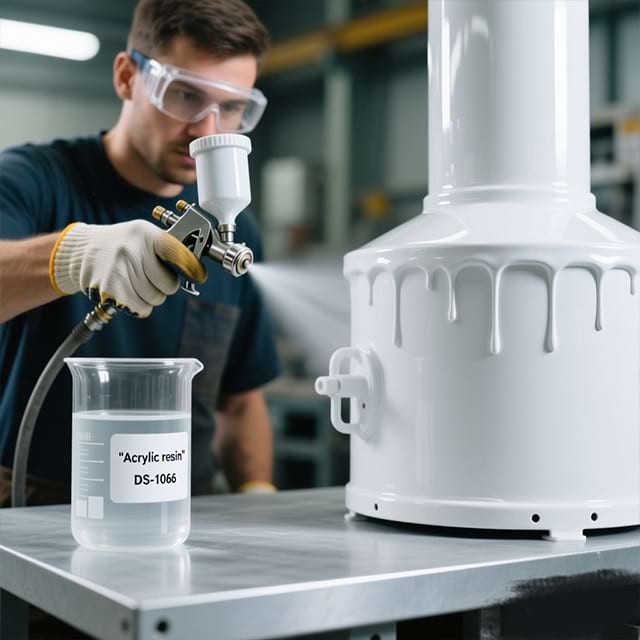
This foundational material offers exceptional UV resistance. Products made from it do not yellow easily when exposed to sunlight. It provides superior optical clarity. This makes it a popular substitute for traditional glass. It also delivers high color stability.
Beyond visual properties, the polymer boasts high resistance to water. It withstands severe environmental degradation over time. These physical attributes make Acrylic Resin an ideal starting point for outdoor applications. Engineers rely on its inherent stability before adding any secondary chemical modifiers.
Buyers must understand exactly when to procure the raw polymer. You should source the base material under these specific conditions:
In-house Formulation: Chemical manufacturers purchase it to create proprietary paints. They use it to formulate varnishes or design custom bonding agents.
Casting and Molding: Fabricators buy it for manufacturing solid parts. They use it to create Plexiglas alternatives, automotive light lenses, and medical device housings.
Coating Applications: Industrial suppliers use it to develop protective surface layers. These coatings protect heavy equipment from harsh weathering and chemical exposure.
Engineers must evaluate the raw material using strict chemical metrics. You cannot judge it by its adhesive tack, because it has none yet. Instead, you must analyze its molecular structure.
Key indicators include molecular weight. A higher molecular weight generally increases physical toughness. You must also check the glass transition temperature (Tg). This metric defines the temperature at which the plastic changes from a hard state to a rubbery state. Finally, evaluate the cross-linking density. This determines the overall chemical resistance of the final cured matrix.
Polymer Evaluation Metrics Table
Metric | Primary Function | Impact on End Product |
|---|---|---|
Molecular Weight | Determines polymer chain length. | Influences tensile strength and processing viscosity. |
Glass Transition (Tg) | Measures thermal state changes. | Dictates operational temperature range and flexibility. |
Cross-linking Density | Evaluates chemical bond network. | Enhances solvent resistance and structural rigidity. |
Manufacturers engineer these bonding agents into several distinct categories. Each type serves a highly specific industrial function.
Cyanoacrylates (Super Glues): These offer instant curing. They react to trace moisture on surfaces. They are ideal for small, tight-fitting assemblies in electronics or medical devices.
Methyl Methacrylate Adhesives (MMAs): These are robust two-part structural agents. They are known for incredibly high peel and shear strength. They require minimal surface preparation before application.
UV-Curing Formulations: These provide demand-cure capabilities. They remain liquid until exposed to specific ultraviolet light. Manufacturers use them heavily for bonding glass and clear plastics.
These engineered products deliver rapid curing rates at room temperature. This significantly reduces assembly line bottlenecks. Factories do not need massive heating ovens to cure the bonds. You can achieve handling strength in minutes.
They also offer the ability to bond dissimilar substrates. You can bond aluminum directly to low-surface-energy plastics. They typically achieve this without extensive, time-consuming primers. This saves significant labor during the manufacturing process.
You should purchase the finished formulation when your goal is immediate structural assembly. Automotive and aerospace companies use them for large panel bonding. They replace mechanical fasteners to reduce vehicle weight.
Construction firms use them for heavy-duty anchoring. Engineers often compare them alongside epoxies for structural integrity in concrete. Electronics manufacturers rely on them for precise component assembly and protective potting applications.
Best Practice: Always match the adhesive viscosity to your assembly gap size. Low viscosity works for tight tolerances. High viscosity pastes fill large gaps effectively.
Buyers often face a roadblock when choosing between these two leading structural technologies. You must understand their distinct behavioral differences.
Consider the curing rate. The modified formulations generally offer much faster snap-cures. They achieve handling strength faster than standard epoxies. Next, evaluate surface preparation. These products tolerate oily or unprepared surfaces far better. Epoxies demand strict, labor-intensive cleaning protocols.
Finally, compare flexibility versus rigidity. Epoxies offer extreme rigid shear strength. However, they can become brittle. Modified formulations provide better impact resistance. They offer superior flexural tolerance under stress.
Structural Bonding Comparison Chart
Performance Factor | Standard Epoxy | Modified MMA Solution |
|---|---|---|
Cure Speed | Moderate to Slow | Very Fast (Snap-Cure) |
Surface Prep Required | High (Critical) | Low (Tolerates Oils) |
Impact Resistance | Low (Brittle) | High (Elastomer Modified) |
Odor Level | Low | High (Requires Ventilation) |
You must base your final selection on rigorous engineering parameters. First, assess your load requirements. If your assembly experiences dynamic loads like constant vibration, favor MMAs. Their flexibility absorbs the kinetic energy. If your assembly holds static, massive weights, you might favor specialized epoxies.
Next, assess your substrate conditions. Determine if the environment is wet or cold. Look at the plastic types you are joining. Low-surface-energy (LSE) plastics resist most glues. They typically require specialized formulations designed specifically to bite into difficult plastics.
Integrating these chemical products into a factory requires strict safety oversight. You must manage specific occupational hazards.
Odor and VOC emissions present the first challenge. Many reactive formulations, especially MMAs, emit strong odors. They require proper industrial ventilation. You must ensure occupational safety compliance to protect your assembly line workers.
Exothermic reactions present the second challenge. High-volume mixing of two-part formulations generates significant heat. This chemical reaction cures the product. However, if unmanaged, this extreme heat can warp thin plastic substrates. You must implement strict process controls regarding bead size and application speed.
Common Mistake: Dispensing a large mass of MMA into a confined space. The concentrated exothermic heat can cause the material to boil, creating weak, porous bonds.
Inventory management differs wildly between the base polymer and the finished compound. Raw polymers often boast longer, highly stable shelf lives. You just need to keep them away from extreme temperatures and direct sunlight.
Formulated products act differently. Especially the reactive ones, they are highly sensitive to temperature variations. They carry strict, short expiration dates. Using expired product guarantees catastrophic bond failure. This short lifespan heavily impacts your inventory forecasting and procurement cycles.
You must take proactive steps before finalizing a bulk purchase. Always request Technical Data Sheets (TDS) and Material Safety Data Sheets (MSDS) from the manufacturer. Read them thoroughly to understand the chemical limits.
Set up strict pilot testing. Never assume a product will work based on marketing claims. Validate substrate adhesion in your own facility. Test the bonds under your specific environmental stresses before committing to bulk procurement.
Understanding industrial terminology protects your manufacturing process. We have established a clear chemical baseline. The raw polymer acts as a versatile foundational building block. The finished adhesive serves as a purpose-built, highly engineered structural bonding solution.
We advise procurement teams to thoroughly audit their manufacturing needs. Opt for base polymers if you are building a product or coating from the ground up. Opt for formulated structural compounds to solve immediate assembly and fastening challenges.
Do not guess on chemical compatibility. Encourage your engineering teams to consult directly with chemical suppliers. Review the technical data sheets thoroughly. Match the material precisely to your specific environmental conditions and dynamic load-bearing requirements.
A: Technically it can bind materials slightly as it dries, but it fails as an industrial glue. It lacks the necessary tackifiers, flexibilizers, and chemical catalysts. These additives provide reliable, structural adhesion under load. The raw polymer remains brittle without complex formulation.
A: It entirely depends on the specific performance metric. Epoxies typically exhibit higher absolute tensile strength. However, structural variants (like MMAs) offer vastly superior impact resistance and peel strength. They also perform significantly better on unprepared, oily surfaces where epoxies would immediately fail.
A: Cross-linking is a critical chemical process. It occurs when individual polymer chains bond together during the curing phase. This reaction transforms the liquid or paste into a solid, highly durable matrix. A dense cross-linked network creates immense resistance to extreme heat and harsh industrial solvents.


