


Views: 0 Author: Site Editor Publish Time: 2026-10-30 Origin: Site


Selecting the correct binder in industrial formulations directly impacts production speed, application efficiency, and the final product's durability. For manufacturing environments that prioritize rapid physical drying without the need for thermal curing, integrating a specialized DS-1250 Thermoplastic Acrylic Resin offers distinct operational advantages. This high-molecular-weight polymer softens upon heating and hardens upon cooling. Unlike reactive systems, it dries purely through the evaporation of solvents and requires zero chemical crosslinking agents.
Formulators frequently face challenges when attempting to match the physical properties of various binders to precise end-use environments. They must constantly balance flexibility, surface hardness, and chemical resistance. This comprehensive guide examines where these polymers truly excel in the field. We will detail core chemical properties, compare resin categories, and highlight high-performance options designed to solve complex manufacturing bottlenecks. The objective is to assist procurement managers and chemical formulators in making evidence-based material selections tailored to their specific industrial requirements.
These polymers dry rapidly via physical solvent evaporation, entirely eliminating the need for high-temperature baking ovens or complex two-part mixing.
Primary applications include automotive refinish coatings, marine topside paints, high-speed printing inks, and protective concrete sealers.
Inherent chemical benefits encompass exceptional UV resistance, superior long-term weatherability, high gloss retention, and excellent color stability over decades of exposure.
Advanced formulations offer industry-leading adhesion and durability, specifically engineered for specialized industrial projects and notoriously difficult plastic substrates.
Understanding the fundamental differences between thermoplastic (reversible) and thermosetting (permanent) systems remains crucial for optimizing manufacturing costs, meeting environmental standards, and extending product lifespans.
To make informed procurement decisions, industry professionals must first understand the foundational chemistry. Chemists synthesize these materials through the controlled polymerization of acrylic and methacrylic acid monomers, alongside their ester derivatives. By carefully adjusting the ratio of "hard" monomers (like methyl methacrylate) to "soft" monomers (like butyl acrylate), they can precisely engineer the resin's glass transition temperature (Tg). This molecular structure provides inherent tensile strength and film integrity without the addition of external curing agents or hardeners. Because the polymer chains do not chemically crosslink with one another during the curing phase, they maintain their thermoplastic nature. Consequently, the material can be repeatedly softened by heat and hardened by cooling without undergoing any fundamental chemical alterations.
The defining characteristic of this specific polymer category is its physical drying mechanism. Film formation occurs exclusively through solvent evaporation. As the carrier solvent flashes off the applied liquid layer, the long polymer chains begin to entangle. They move closer together until they eventually form a continuous, solid protective film on the substrate. This differs fundamentally from thermosetting systems, which rely on a chemical reaction induced by heat or reactive hardeners to form a permanent network.
Because no chemical bonds break or form during this phase, thermoplastic films exhibit a unique property known as reversibility. If exposed to the original solvent formulation, the dried solid film will re-dissolve back into a liquid state. Imagine a technician flushing spray lines at the end of a shift; this reversibility proves highly advantageous for equipment maintenance, application adjustments, and seamless multi-coat adhesion. The new layer slightly re-wets the previous layer to create a unified, monolithic finish.
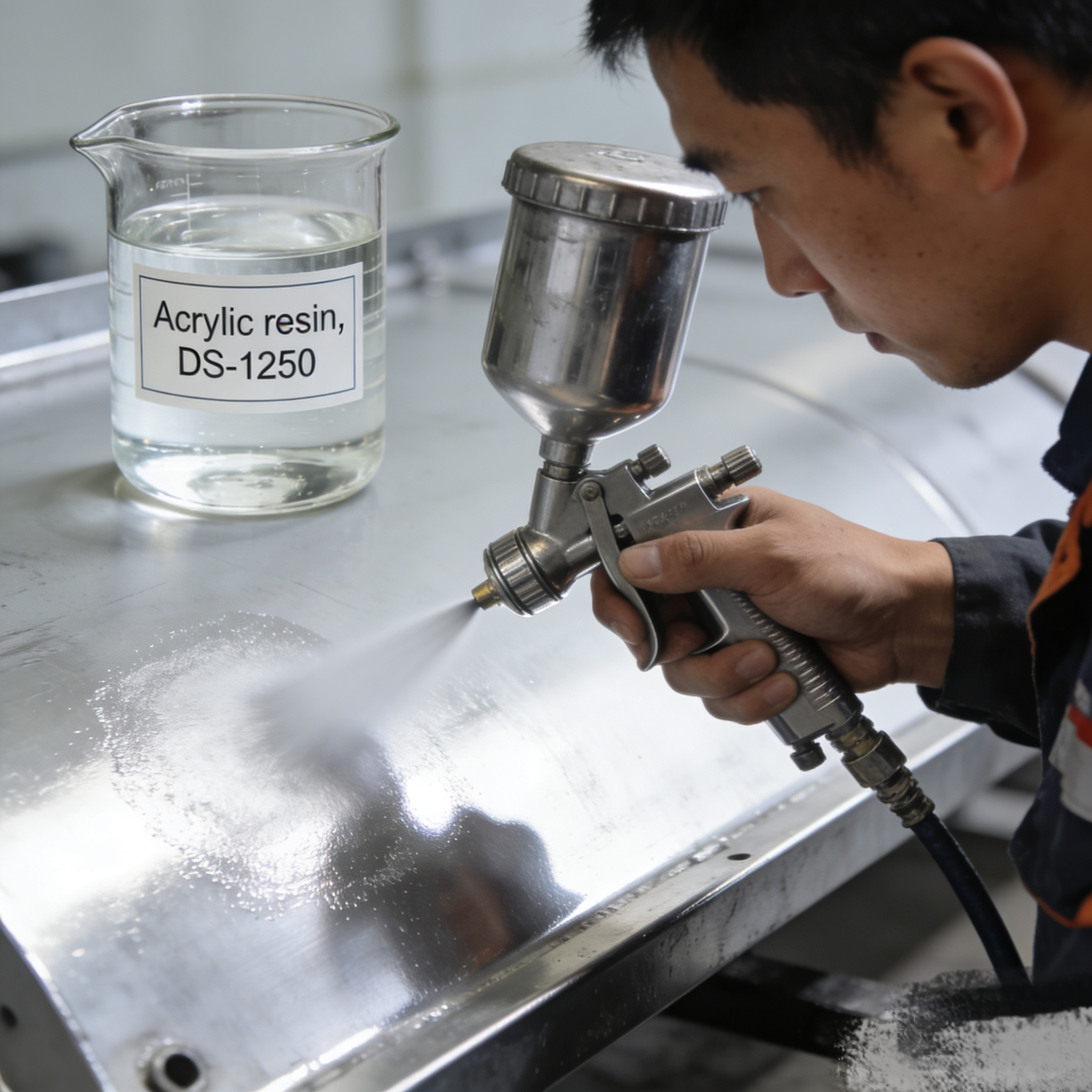
Empirical field data consistently demonstrates that the aliphatic carbon backbone of acrylic polymers inherently resists degradation from ultraviolet radiation. Aromatic polymers—such as certain polyurethanes or standard epoxies—often yellow, chalk, or become brittle when exposed to prolonged sunlight. In contrast, thermoplastic acrylics lack the specific chromophores that absorb UV light. They maintain their optical clarity and structural integrity over time. This remarkable UV stability makes them the definitive choice for exterior applications facing relentless exposure to harsh environmental variables.
In high-volume manufacturing, time directly translates to overhead costs. Because the curing process relies solely on the physical evaporation of solvents, these resins offer significantly accelerated air-drying times. Facilities can achieve "dust-free" and "tack-free" states at standard ambient temperatures in a fraction of the time required by oxidative or catalyzed systems. From an operational standpoint, this physical mechanism bypasses the massive energy consumption associated with industrial baking ovens. It drastically accelerates production line throughput, prevents bottlenecks in the finishing department, and offers a measurable reduction in the facility's carbon footprint.
Optical clarity serves as a standard metric for evaluating premium binders. The highly transparent nature of the polymer matrix allows for optimal pigment dispersion and light transmission. Formulators utilize this characteristic to achieve brilliant, glass-like finishes and vibrant, accurate color reproduction in paints and inks. The robust chemical stability of the matrix ensures the initial color profile is retained over extended periods, minimizing pigment fading even under aggressive environmental stress.
Recent industry analyses reveal a significant macro-shift in the global coatings market toward low-energy, high-efficiency materials. Driven by soaring energy costs and increasingly strict carbon footprint mandates, manufacturing facilities are actively phasing out energy-intensive baking systems wherever possible. The market is pivoting heavily towards high-performance, air-drying polymers that do not compromise on outdoor durability. Analysts note a growing preference for single-component (1K) systems in regions with stringent emission regulations, as they minimize material waste and streamline application processes. The applications that benefit most from this intersection of rapid turnover and lower energy consumption are diverse.
The automotive refinish sector requires coating materials that dry quickly in standard, ambient-temperature body shop environments while perfectly matching the original factory gloss. Technicians utilize these binders heavily in automotive clear coats, primer surfacers, and touch-up formulations. Picture a busy collision repair center: a painter can apply multiple coats in quick succession because the rapid solvent release minimizes the risk of dust entrapment. For general industrial coatings, they provide a reliable, fast-drying protective layer for heavy machinery and large metal components simply too massive for a factory baking oven.
Exterior architectural surfaces and marine topsides demand extreme weatherability and moisture resistance. These environments face continuous salt spray, heavy driving rain, and intense UV exposure. In marine paints, the polymer provides a dense, hydrophobic barrier that prevents water ingress, protecting the underlying hull materials from hydrolysis. In architectural applications, contractors rely on its long-term color retention, resistance to surface chalking, and inherent flexibility to accommodate the thermal expansion and contraction of buildings.
The modern packaging industry relies on flexographic and gravure printing processes that operate at blistering speeds. Integrating a DS-1250 Thermoplastic Acrylic Resin into printing inks facilitates near-instantaneous drying on non-porous substrates, such as treated polyethylene (PE) films, polypropylene (BOPP), and metallic foils. The binder ensures the ink adheres securely without smudging or offsetting as the packaging material moves rapidly through heavy steel rollers. Its inherent optical clarity also maximizes the visual impact of commercial packaging graphics.
Concrete is highly porous, making it susceptible to damage from freeze-thaw cycles, water ingress, and automotive fluid spills. Clear concrete sealers use this binder to effectively penetrate the surface matrix, forming a durable, continuous protective film. Their superior UV resistance ensures the clear sealer does not yellow, peel, or blister under direct sunlight, preserving the intended aesthetic of stamped or exposed aggregate concrete for years.
Road marking applications require strict adherence to minimal traffic disruption times to maintain public safety. Formulated with fast-evaporating solvents like toluene or fast acetates, these paints represent the established global standard for traffic marking. A freshly painted road line can often bear heavy vehicle traffic within mere minutes of application. The high molecular weight of the matrix provides necessary abrasion resistance against continuous tire wear and harsh weather conditions, while excellently retaining reflective glass beads.
Both the consumer DIY and industrial aerosol spray paint markets utilize this specific resin type to ensure an even, easily applicable finish. The physical drying mechanism suits aerosols perfectly, allowing users to apply multiple thin coats with minimal waiting time between passes. The reversible nature of the material provides a distinct mechanical advantage: it prevents the spray nozzle from permanently clogging. The fresh solvent in subsequent sprays easily dissolves minor resin build-up within the actuator, ensuring a clean spray pattern every time.
Coating plastic substrates presents unique formulation challenges. Aggressive solvent blends or high-heat curing processes can warp, melt, or structurally degrade the underlying material. By utilizing specific, milder solvent blends (like alcohols or particular esters), these resins provide excellent adhesion to common plastics—such as ABS, polycarbonate, or polystyrene—without causing damage. Manufacturers widely use them to coat consumer electronic housings, television bezels, laptop casings, and automotive interior trims, delivering necessary scratch resistance and a premium tactile feel.
While generic commodity binders serve basic needs, demanding industrial environments require highly engineered solutions. Procurement managers seeking top-tier reliability often turn to specialized grades like the DS-1250 Thermoplastic Acrylic Resin. Manufactured under strict quality control protocols, this formulation features a tightly controlled molecular weight distribution and an optimized glass transition temperature. This specific balance ensures the final applied film is neither too brittle in freezing outdoor environments nor excessively soft and tacky under elevated summer temperatures.
Empirical testing demonstrates that this advanced formulation provides superior pigment wetting capabilities. This allows formulators to reduce milling times and achieve higher color strength with lower pigment loading, preserving the optimal viscosity and flow of the liquid coating. It exhibits exceptionally broad thermodynamic compatibility, dissolving readily in esters, ketones, and aromatic hydrocarbons.
Due to its high purity and robust mechanical properties, this formulation is highly recommended for premium applications where failure is simply not an option. It excels in high-grade plastic coatings where aggressive adhesion to low-surface-energy materials is required. It is also the binder of choice for metallic and pearlescent paints; its exceptional optical clarity allows aluminum flakes and mica pigments to align perfectly, maximizing the visual "flop" effect in automotive finishes. Specialty gravure ink manufacturers utilize it when rapid solvent release and zero residual odor are mandatory for compliance in food packaging.
Selecting the correct resin base is arguably the most critical decision in the formulation process. Misjudging the operational environment can lead to catastrophic coating failure. As established, thermoplastic systems are 1-Component (1K) systems that dry physically and remain sensitive to strong solvents. In contrast, thermosetting acrylic resins require a chemical reaction to cure. They contain reactive functional groups and are typically formulated with a cross-linking agent (such as melamine, isocyanate, or epoxy). They require either the addition of a catalyst or exposure to high heat (baking) to initiate the reaction. Once a thermosetting resin cures, it forms an irreversible, highly cross-linked three-dimensional network that cannot be re-dissolved or melted.
To optimize manufacturing efficiency and product lifespan, procurement teams should utilize an objective framework based on operational constraints:
Feature | Thermoplastic Acrylic Resin | Thermosetting Acrylic Resin |
|---|---|---|
Drying Mechanism | Physical (Solvent Evaporation) | Chemical (Crosslinking) |
Curing Temperature | Ambient (Air-Dry) | Elevated (Baking) or Catalyzed |
Reworkability | High (Reversible with original solvent) | Low (Permanent chemical bond) |
Chemical Resistance | Moderate (Sufficient for general use) | Very High (Resists harsh industrial solvents) |
Ideal Substrates | Plastics, Concrete, Roadways, Wood | Metal Appliances, Automotive OEM Assembly |
Choose thermoplastic variants when the manufacturing line requires rapid, ambient-temperature air drying, or when dealing with temperature-sensitive substrates like plastics and paper. Conversely, select thermosetting variants for OEM factory settings where extreme chemical resistance, maximum surface hardness, and high-heat tolerance are mandatory.
To maximize the performance of a physical drying binder, chemists must adhere to strict formulation protocols. The solvent blend represents the most critical variable, dictating the drying rate, flow, and leveling characteristics of the final coating. Formulators utilize Hansen Solubility Parameters to select a mixture that completely dissolves the polymer while tightly controlling the evaporation curve.
A standard field practice involves formulating a solvent gradient. Fast solvents (like acetone or ethyl acetate) drop the initial viscosity for clean atomization and provide a rapid initial set-up, preventing runs and sags. Medium solvents (like toluene or xylene) maintain a wet edge, allowing the polymer chains to level out into a smooth, high-gloss finish. Finally, slow "tail" solvents (like PMA or butyl acetate) remain in the film just long enough to prevent blushing—a defect caused by moisture condensation on the rapidly cooling film—and eliminate microscopic surface imperfections like orange peel.
While these 1K systems do not suffer from the strict, short pot-life limitations of catalyzed two-part thermosets, proper storage protocols remain essential. Solid thermoplastic polymers are typically supplied in bead or powder form. Because they soften under heat, they must be stored in cool, dry environments away from direct sunlight to prevent the beads from agglomerating or fusing together in the bag.
As global environmental regulations tighten around Volatile Organic Compounds (VOCs), formulators must adapt. Modern best practices involve transitioning to VOC-exempt solvents where legally applicable, or engineering high-solids systems. These advanced formulations deliver more active binder and less solvent per spray pass, ensuring strict environmental compliance without sacrificing the rapid drying benefits that make the system so valuable.
The most successful industrial applications demand a flawless balance of rapid production speed and enduring protection. By bypassing the need for energy-intensive baking ovens, these physical-drying polymers drastically cut manufacturing costs and alleviate line bottlenecks. From the high-gloss demands of automotive refinishing to the rugged durability required by road marking paints and marine coatings, their exceptional UV resistance and optical clarity make them an indispensable tool in modern chemical formulation.
Ultimately, the success and longevity of the end product rely heavily on selecting a high-purity, meticulously engineered binder. By upgrading to advanced solutions like the DS-1250 Thermoplastic Acrylic Resin, manufacturers can guarantee superior pigment dispersion, predictable solvent release, and unmatched adhesion across a diverse range of challenging industrial substrates.
The primary advantage is the significantly faster physical drying time. Thermoplastic acrylics dry entirely through solvent evaporation, eliminating the need for complex two-part mixing. This means there are no strict pot-life limitations during application, reducing material waste. Aliphatic acrylics generally offer superior, long-term resistance to UV degradation and yellowing compared to standard aromatic polyurethanes.
Yes. Once the carrier solvent fully evaporates and the film solidifies, it forms a highly dense, water-resistant barrier. The resulting polymer matrix repels liquid water exceptionally well, which is exactly why this specific binder is heavily specified in marine topside paints, swimming pool coatings, and exterior concrete sealers designed to prevent moisture ingress.
Absolutely. Formulators frequently blend them with other compatible materials to fine-tune specific performance metrics. They are commonly modified with external plasticizers to increase the flexibility of the final film. Blending them with nitrocellulose or Cellulose Acetate Butyrate (CAB) can further accelerate drying speeds, modify surface hardness, and improve solvent release properties in custom industrial formulations.
This specific grade stands out due to its highly engineered balance of surface hardness and structural flexibility, driven by a tightly controlled molecular weight. It features exceptionally broad thermodynamic compatibility with various industrial pigments and solvent blends. This predictable, stable behavior makes it a highly versatile and reliable choice for premium plastic coatings, complex metallic paints, and demanding high-speed ink formulations.
Because the drying process is a reversible physical change rather than a permanent chemical cross-linking reaction, the coating can be easily reworked. Operators can dissolve and wipe away the dried film by applying the original solvents used in the formulation, such as xylene, toluene, or specific acetates. This reversibility allows for effortless spray equipment cleaning and rapid part rework on the manufacturing floor.
Drying time depends heavily on the specific solvent blend and the ambient application temperature. Generally, it reaches a "dust-free" state within 15 to 30 minutes at standard room temperature. The coated part can typically be fully handled or packaged within a few hours, drastically reducing production wait times.
Yes, it is frequently used as a premium protective clear coat over existing paint layers to enhance gloss and UV resistance. However, operators must ensure the underlying paint is fully cured and chemically compatible with the specific solvents used in the acrylic formulation to prevent lifting, wrinkling, or delamination.


