


Fundamentally, an Acrylic Resin serves as a highly versatile synthetic polymer. Chemical engineers synthesize it directly from acrylic or methacrylic acid derivatives. Industries worldwide highly value this specific material. It provides exceptional optical clarity, proven weatherability, and incredibly fast curing capabilities. Engineers and procurement teams constantly face a complex material selection problem. You must balance strict performance metrics against rigid implementation constraints. For instance, high UV resistance and strong tensile strength often compete directly against rapid curing times and strict VOC emissions limits. Navigating these daily trade-offs directly dictates overall project success. This guide intentionally moves beyond basic chemical definitions. We aim to provide a practical, commercial evaluation framework. You will learn exactly how to select the right formulations for demanding industrial applications. By applying these technical insights, you can optimize both manufacturing speed and final product durability.
Core Strength: Acrylic resins deliver superior UV stability and color retention compared to most industrial polymers, making them optimal for exterior coatings and structural adhesives.
Alternative Comparison: While epoxies offer higher structural hardness and chemical resistance, acrylic resins cure faster and do not yellow under sunlight.
Compliance Shift: The industry is rapidly migrating from solvent-based to waterborne acrylic resins to meet strict global VOC (Volatile Organic Compound) regulations without sacrificing adhesion.
Evaluation Criteria: Selection depends on a matrix of curing environment, substrate compatibility, thermal requirements, and lifecycle cost.
We classify these synthetic polymers into two primary chemical categories. You will typically evaluate thermoplastic and thermosetting options. Each distinct type behaves differently during the active curing phase. Understanding this fundamental chemistry helps you avoid critical application failures.
Thermoplastic variants feature a notably high molecular weight. They dry through a simple, entirely physical process. The carrying solvent slowly evaporates into the air. This evaporation leaves a solid, protective film behind on the substrate. You can redissolve this exact film later using specific chemical solvents. We often recommend thermoplastic options for rapid-dry industrial coatings. They also work beautifully in highly reversible manufacturing applications.
Conversely, thermosetting variants start at much lower molecular weights. They require an external curing agent to function properly. Mixing these components triggers an immediate chemical cross-linking process. This specific reaction permanently alters the internal polymer structure. Once fully cured, the material becomes incredibly tough. You cannot easily melt or reverse it. Manufacturers rely heavily on thermoset durability for demanding environments. Automotive clear coats utilize these exact thermosetting properties to resist daily physical impacts.
Polymer Classification | Molecular Weight | Curing Mechanism | Reversibility | Primary Use Case |
|---|---|---|---|---|
Thermoplastic | High | Physical drying (solvent evaporation) | Highly reversible | Rapid-dry coatings, temporary sealants |
Thermosetting | Low (prior to cure) | Chemical cross-linking (curing agent) | Permanent (non-reversible) | Automotive finishes, structural adhesives |
Every commercial formulation translates specific chemical features into measurable industrial outcomes. You should evaluate these three primary performance characteristics before specifying a material.
Optical Clarity: The polymer structure naturally achieves up to 92% light transmission. This exceptional clarity closely rivals optical glass. The final outcome is a brilliantly transparent finish. It completely resists ugly yellowing over time.
Weatherability: The chemical backbone inherently resists aggressive UV degradation. It lacks the aromatic rings found in lesser plastics. Sunlight cannot easily break these strong chemical bonds. The outcome is a massively extended asset lifespan in harsh outdoor environments.
Adhesion Profile: The material bonds incredibly effectively to widely diverse substrates. It easily grips bare metals, rigid plastics, and porous concrete. You can modify the specific acid derivatives to target notoriously difficult surfaces.
Engineers frequently debate the merits of various industrial polymers. You must compare an Acrylic Resin against traditional epoxies and polyurethanes. Each material possesses distinct operational advantages. Choosing incorrectly often leads to premature mechanical failures.
We first look at curing speed differences. Acrylic formulations cure significantly faster than standard epoxies. They often reach handling strength in mere minutes. Epoxies typically require several hours or even days to fully cure. This rapid speed drastically reduces costly production bottlenecks on assembly lines. You can move finished parts much faster.
We next evaluate the overall durability profile. Epoxies easily win regarding raw tensile strength. They also provide extreme chemical resistance against harsh industrial solvents. However, acrylics absolutely dominate regarding long-term UV stability. Standard epoxies chalk, degrade, and yellow rapidly outdoors. Acrylics maintain their pristine aesthetic integrity. They also offer superior mechanical flexibility, preventing micro-cracks under active vibration.
Handling characteristics separate these two materials clearly. Acrylics generally arrive as a simple single-component system. When formulated as a two-part system, they remain much easier to mix accurately. More importantly, they show far less sensitivity to ambient moisture during the active cure. Polyurethanes react poorly in highly humid environments. They often bubble or foam if moisture breaches the mixture.
Wear resistance dictates the final selection in physical applications. Polyurethanes offer genuinely superior abrasion resistance. We strongly recommend them for high-traffic physical wear scenarios, like industrial flooring. Conversely, acrylics excel deeply in static environmental protection. They shield structures perfectly against rain, sun, and temperature swings.
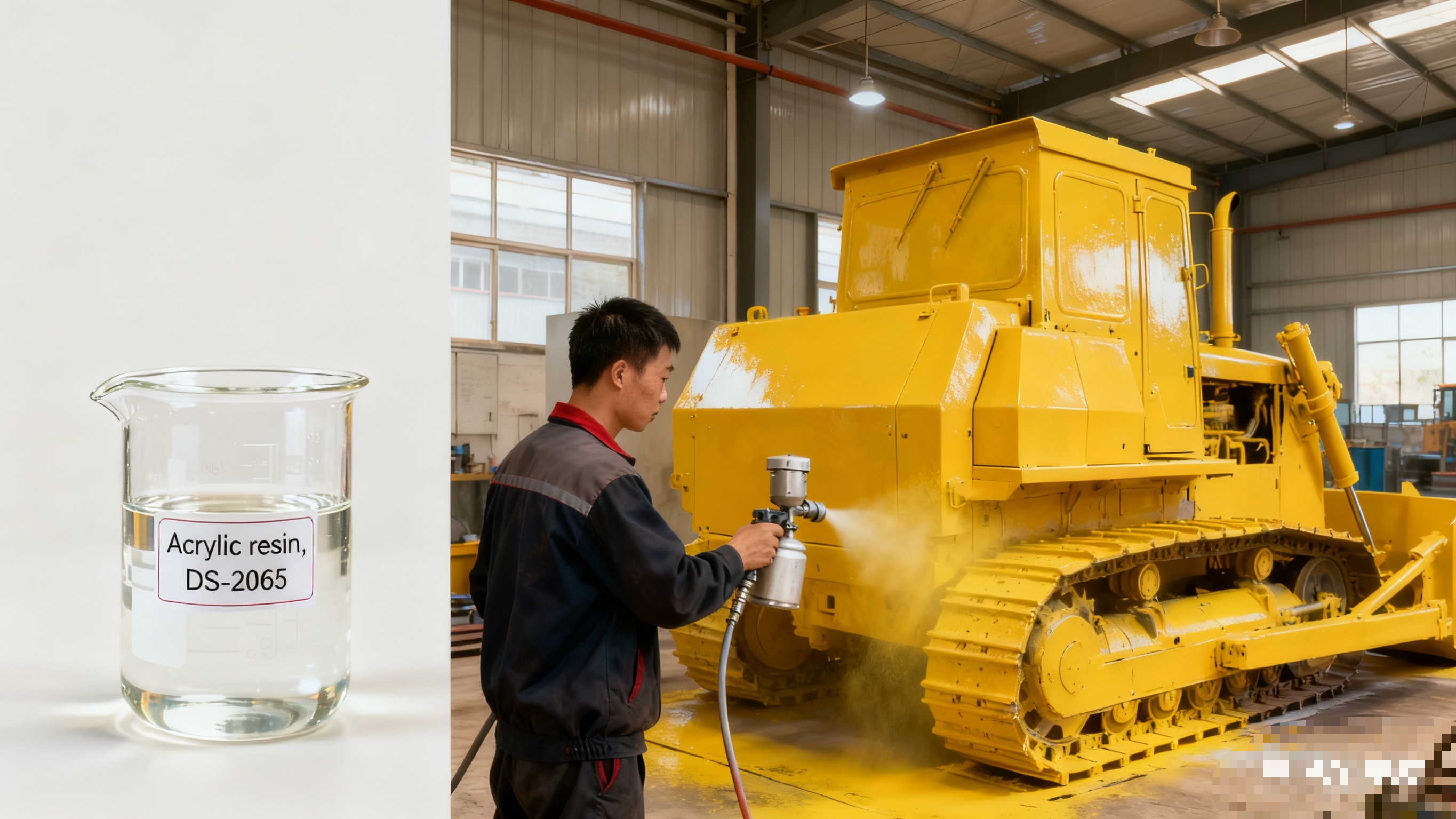
Theoretical chemistry only matters when applied to real-world problems. Industries deploy these advanced polymers across four major sectors. We see them solving distinct engineering challenges daily.
Paint manufacturers rely on these polymers heavily. They form the backbone of premium marine and automotive paints. The material provides unmatched gloss retention under direct sunlight. We also see massive adoption in exterior structural paints. Bridges and heavy machinery benefit from this extreme weathering resistance. The coating actively protects underlying metals from corrosive oxidation.
Modern manufacturing demands lighter, stronger assembly methods. Aerospace and automotive sectors utilize specialized two-part acrylic adhesives. They use these bonds to completely replace heavy mechanical fasteners. Removing rivets and bolts reduces overall vehicle weight significantly. Furthermore, the cured adhesive offers incredibly high impact resistance. It absorbs kinetic energy safely during active collisions.
Advanced composites require reliable matrix materials. Manufacturers specifically select these polymers for fiberglass-reinforced applications. They perform exceptionally well in mass transit interiors. The material inherently supports strict fire retardancy standards. It also guarantees extremely low smoke emissions during a thermal event. Passenger safety regulations heavily drive this specific material choice.
The construction industry mixes these polymers directly into cementitious products. Using them as a liquid binder transforms basic concrete. It dramatically improves the flexibility of the rigid cement. It also increases the overall tensile strength of the slab. Finally, the polymer network provides excellent water resistance. It actively prevents moisture from freezing and cracking the concrete during winter.
Selecting the optimal formulation requires a systematic approach. You cannot simply pick a product based on basic technical data sheets. We recommend following a strict evaluation framework. This prevents costly manufacturing errors down the line.
You must first identify what dictates project success. Determine if the project prioritizes long-term aesthetic longevity above all else. Gloss retention and color stability demand specific formulations. Alternatively, you might need maximum structural bonding strength for load-bearing joints. Sometimes, rapid assembly times override other concerns. You need a material that cures in three minutes to keep the line moving. Rank these specific criteria clearly.
Next, you must map the specific chemical formulation directly to your target substrate. Not all polymers bond to all surfaces equally. You should deploy thermoplastic variants for bonding rigid plastics together. They aggressively bite into the plastic surface. Conversely, you need specialized cross-linking formulations for bare metals. These thermosetting versions create strong mechanical anchors inside the microscopic metal pores.
Finally, carefully assess your available curing infrastructure. You need to know if the factory relies on ambient air drying. Perhaps you utilize forced heat ovens or concentrated UV light tunnels. Match the polymer's curing mechanism to your exact facility capabilities.
Follow these specific steps to ensure scalable production:
Audit the environment: Measure average factory temperature and ambient humidity.
Calculate pot-life: Determine exactly how long the mixed material remains workable in the bucket.
Measure working-time: Time how long operators take to assemble the coated parts.
Prevent material waste: Ensure the pot-life strictly exceeds your required working-time.
Confirm curing gear: Verify your ovens or UV lamps output the correct energy spectrum.
What to watch out for: Fast-curing thermosets generate intense internal heat. We call this an exothermic reaction. If you mix too much material at once, it can rapidly overheat in the container. Always mix smaller, highly manageable batches to maintain workplace safety.
Deploying advanced polymers introduces specific operational risks. You must navigate tightening environmental regulations carefully. You also need to manage distinct thermal and storage limitations effectively.
The global manufacturing industry faces intense regulatory pressure to drastically reduce VOCs. Governments strictly limit solvent emissions to protect the atmosphere. Consequently, the industry is rapidly shifting toward waterborne formulations. You must understand the inherent trade-offs here. Early-generation waterborne products struggled massively with freeze-thaw stability. If they froze during winter shipping, the emulsion permanently broke.
Modern chemical formulations successfully bridge this performance gap. They perform almost identically to traditional solvent-based versions. However, they demand much stricter temperature control during the actual application phase. High ambient humidity severely delays the water evaporation process. You often need specialized dehumidification equipment in the factory to ensure reliable curing speeds.
You must actively acknowledge standard thermal boundaries. Standard formulations exhibit notably lower heat deflection temperatures. They soften if exposed to extreme heat. You should compare them against high-temp epoxies or advanced polyimides. They are simply unsuitable for extreme high-heat industrial components. Never specify them for engine blocks, exhaust manifolds, or high-friction aerospace leading edges.
Chemical storage requires strict facility protocols. Certain catalyzed two-part systems exhibit extreme shelf-life sensitivity. They easily degrade if stored in warm warehouses. You must rotate your inventory rigorously.
Furthermore, traditional solvent-based variants introduce serious flammability concerns. The evaporating solvents create highly explosive vapor pockets. Your facility requires industrial-grade ventilation systems. Operators must wear proper respiratory protection. Ground all metal mixing containers securely to prevent dangerous static sparks.
Ultimately, an Acrylic Resin is not a magical, universal solution for every engineering problem. However, it absolutely remains the premier choice for specific scenarios. Applications demanding extreme UV stability, rapid curing speeds, and highly versatile adhesion rely on this chemistry. We see its dominance continually expanding across global automotive, marine, and construction sectors.
Base your final material selection on precise environmental exposure data. You must differentiate between indoor and harsh outdoor applications. Evaluate your actual load-bearing requirements carefully. Finally, ensure you strictly follow local regulatory constraints regarding volatile emissions.
As a critical next step, we strongly advise contacting material suppliers directly. Always request the latest Technical Data Sheets (TDS) and Material Safety Data Sheets (MSDS). Review these documents with your engineering team. Never skip practical testing. Always conduct small-scale substrate adhesion testing in your actual factory environment before authorizing full-scale procurement.
A: No. They have fundamentally different chemical structures. Acrylics excel immensely in UV resistance and fast curing times. Epoxies remain far superior regarding raw structural hardness and extreme chemical resistance.
A: Advancements in polymer synthesis have successfully closed the historical performance gap. High-performance waterborne systems now offer highly comparable weatherability and adhesion. However, they may require more strictly controlled drying environments to cure properly.
A: It varies heavily by formulation. Thermoplastic variants dry via simple solvent evaporation in minutes to hours. Reactive thermosetting options or two-part adhesives can easily achieve safe structural handling strength in under 15 minutes.
A: While traditional solvent-based formulations emit high VOCs, the industry standard is shifting rapidly. Manufacturers heavily favor low-VOC waterborne systems today. Chemists are also actively exploring bio-based monomer synthesis to drastically improve overall material sustainability.


