


Views: 0 Author: Site Editor Publish Time: 2026-10-08 Origin: Site


Manufacturing high-quality plastics without the right reaction starter is a fast track to ruined batches. Imagine a 10,000-liter jacketed reactor filled with liquid styrene monomer. It just sits there like a stagnant pool until a chemical trigger drops in. Pick the wrong agent, and you not only tank your production efficiency but also invite severe safety hazards onto the plant floor. Dibenzoyl Peroxide, frequently abbreviated as BPO, solves this problem reliably. It acts as the foundational driver for countless polymer sectors.
In this guide, we break down the exact chemical mechanisms behind this compound from a frontline engineering perspective. We will also look at current industry trends shaping its use and outline the best commercial formulations to keep your lines running safely and profitably.
Dibenzoyl Peroxide serves as a premier organic peroxide initiator triggered by thermal energy. It fundamentally drives the creation of strong and stable polymer chains in industrial manufacturing.
The free radical polymerization process relies entirely on three distinct chemical phases: Initiation, Propagation, and Termination. All of these kick off via the homolytic cleavage of the initiator.
Precise temperature control and careful solvent selection are vital for maximizing initiator efficiency and preventing runaway reactions.
For commercial scale operations, choosing the right physical form dictates your plant's safety protocols and mixing homogeneity.
Dibenzoyl Peroxide is a highly reactive organic peroxide with the chemical formula C14H10O4. Registered under CAS 94-36-0, it is recognized across chemical manufacturing and polymer science as one of the most dependable agents for starting complex chemical reactions. It consists of two benzoyl groups bridged by a peroxide link. Specifically, this oxygen-oxygen bond is the structural key to its function. It is relatively weak and prone to breaking under precise thermal conditions.
To understand its true industrial value, we must first clear up the fundamental difference between an initiator and a catalyst. These terms get thrown around interchangeably on the factory floor, but chemically, they do completely different jobs. A catalyst facilitates a chemical reaction by lowering the activation energy, yet it survives the process unchanged. In contrast, an initiator is permanently consumed. Its sole purpose is to break apart and create free radicals. These highly reactive molecules possess an unpaired electron. They act as the aggressive starting point that forces individual monomer molecules to link together into massive polymer chains.
Furthermore, BPO relies primarily on thermal activation. When exposed to heat, it undergoes thermal decomposition. Plant engineers particularly value this peroxide compound because its decomposition occurs predictably at moderate temperature ranges, typically between 60°C and 90°C. Consequently, it is an ideal candidate for a vast array of industrial processes where extreme heat is either unavailable or would degrade the final plastic structure.
To fully appreciate the engineering value of this chemical, facility managers and procurement teams must understand the chemical journey it facilitates. Free radical polymerization is a chain reaction that dictates the final molecular weight, strength, and thermal properties of a plastic. This process unfolds in three distinct stages.
The entire polymerization process begins with the destruction of the BPO molecule. When the reaction vessel reaches the target activation temperature, the weak oxygen-oxygen bond undergoes homolytic cleavage. This means the bond splits evenly, with each oxygen atom taking one electron from the shared pair.
This initial split creates two highly reactive benzoyloxy radicals. Depending on the exact temperature and the surrounding chemical environment, these radicals can further decompose, releasing carbon dioxide gas and leaving behind highly reactive phenyl radicals. Once formed, true initiation begins. The radical aggressively seeks out a stable molecule, attacking the carbon-carbon double bond of a nearby monomer like styrene or methyl methacrylate. By breaking this double bond, the radical transfers its unpaired electron, effectively turning the monomer itself into a new, larger free radical.
Propagation is the phase where the actual material is built. It is characterized by a rapid, continuous domino effect. The newly formed monomer-radical is highly unstable and immediately attacks the double bond of another adjacent monomer. During this phase, the reaction vessel becomes a microscopic assembly line.
As they bond, the unpaired electron is continuously pushed to the end of the growing chain. This process repeats thousands of times in a fraction of a second, rapidly building a long, entangled polymer chain. The primary advantage of using a BPO initiator here is its steady, predictable rate of radical generation. Because it breaks down at a controlled pace, it ensures that not all chains start at the exact same millisecond. This steady propagation is critical for achieving a consistent molecular weight distribution. That consistency directly translates to the physical strength and clarity of your final product.
A polymer chain cannot grow indefinitely. The reaction must eventually stop. Termination is the final stage, occurring when the active, growing ends of the polymer chains are neutralized. This typically happens through combination, where two growing radical chains collide head-on and fuse, or disproportionation, where one radical chain steals a hydrogen atom from another.
Dosing is critical at this juncture. If you dump too much initiator into the reactor, an excess of radicals generates simultaneously. This leads to premature termination, resulting in very short polymer chains and a weak, brittle plastic. Conversely, insufficient dosing leaves you with incomplete reactions and a high volume of residual unreacted monomers.
Moving from chemical theory to commercial procurement, safety and handling become the primary concerns. Pure, 100% concentrated Dibenzoyl Peroxide is exceptionally dangerous. In its dry, pure state, it is highly volatile, shock-sensitive, and prone to explosive decomposition from mere friction or static electricity.
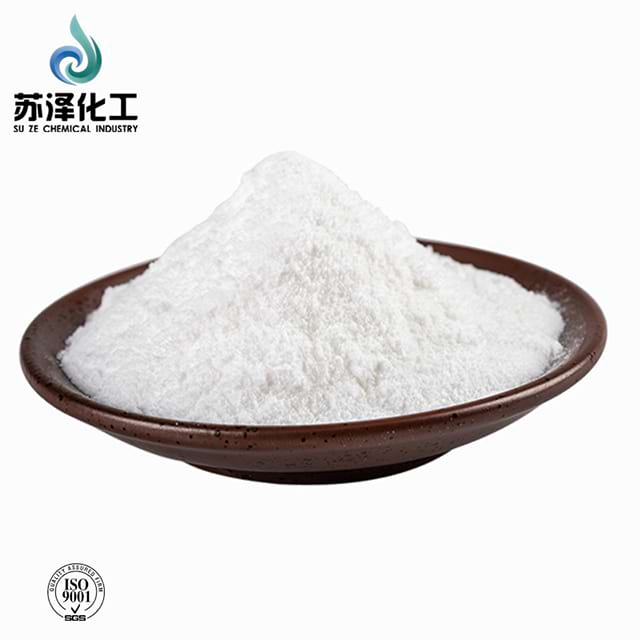
To mitigate these severe risks, reputable manufacturers do not sell pure formulations for standard industrial use. Instead, it is commercially phlegmatized, meaning it is damped with water. A 75% concentration is the industry standard. This water damping absorbs heat and prevents friction, ensuring maximum safety during global transport, warehouse storage, and factory handling. When sourcing this chemical, procurement managers must choose the correct physical form. Utilizing Dibenzoyl Peroxide BPO 75 Powder or Granule depends heavily on your specific production environment.
Feature / Specification | BPO 75% Powder | BPO 75% Granule |
|---|---|---|
Physical Appearance | Fine white powder | Compacted white particles |
Active Peroxide Content | 74% - 76% | 74% - 76% |
Water Content | 24% - 26% | 24% - 26% |
Dissolution Rate | Extremely fast due to high surface area | Moderate, requires slightly more mixing time |
Handling Safety & Dust | Prone to airborne dust, requires strict ventilation | Virtually dust-free, superior worker safety |
Best Industrial Application | Fine chemical synthesis, rapid resin curing, manual batch mixing | Automated hopper systems, large-scale EPS production |
If your facility relies on immediate, homogenous mixing to prevent localized hotspots, the powder form is unmatched. However, for continuous manufacturing operations utilizing automated feeders, granules flow smoothly without caking and drastically reduce inhalation risks for your operators.
Recent market analyses indicate a massive upward trend in the global organic peroxide market. This surge is heavily driven by shifting demands in the construction, automotive, and infrastructure sectors. As global supply chains demand faster project turnarounds, the reliance on rapid-curing resins has skyrocketed.
Specifically, the automotive industry's push for lightweight, fuel-efficient electric vehicles has accelerated the demand for high-strength composite materials. In these advanced composites, BPO acts as a critical curing agent. Furthermore, the transition toward sustainable, energy-efficient building practices has dramatically increased the production of synthetic insulation materials. Understanding these macro trends highlights why sourcing Organic Peroxides from a reliable supply chain is more critical than ever across several key sectors.
Expandable Polystyrene EPS: BPO is the primary initiator used in the suspension polymerization of styrene. This process creates the small, hard polystyrene beads that are later expanded with steam to create the lightweight foam used globally in protective packaging and structural building insulation.
Polymethyl Methacrylate PMMA: Better known as acrylic glass, PMMA requires exceptional optical clarity. BPO is used here because it leaves behind minimal color-inducing residues, resulting in transparent, durable plastics used in automotive taillights and medical devices.
Adhesives and Sealants: In the construction sector, BPO is a critical component in two-part epoxy and acrylic formulations. Its ability to cure rapidly at room temperature allows for fast-setting structural anchors.
Road Marking Paints: Modern cold-plastic road marking systems rely heavily on this initiator. These high-durability traffic paints must crosslink and harden within minutes of being sprayed onto asphalt to minimize road closures.
Even with highly predictable chemicals, manufacturing environments present variables that require strict troubleshooting protocols. Addressing these technical parameters ensures both maximum yield and absolute facility safety.
A common pitfall occurs when a laboratory chemist attempts to scale up a specialized polymer using N,N-Dimethylformamide as a solvent. Solvents are often required to manage viscosity, but this specific solvent can act as a weak reducing agent. This interaction induces the premature decomposition of the peroxide at temperatures far lower than expected, potentially leading to a runaway reaction. Engineers must carefully vet all solvent-initiator interactions before moving to full production.
Another frequent dilemma involves moisture content. Process engineers often wonder if their water-damped Dibenzoyl Peroxide BPO 75 Powder or Granule needs to be pre-dried before use. In the vast majority of industrial applications, the answer is a resounding no. The 25% water content is easily tolerated by most suspension and emulsion processes. Attempting to dry the compound in a facility removes the very safety mechanism designed to prevent explosions. This should never be done outside of strictly controlled, specialized laboratory conditions.
Finally, safe storage is non-negotiable. The chemical must be kept strictly away from reducing agents, strong acids, heavy metal contaminants like rust, and direct sunlight. Facilities must monitor the Self-Accelerating Decomposition Temperature. If the storage environment approaches this critical threshold, the material will begin generating its own heat faster than it can dissipate it. Dedicated, climate-controlled bunkers are a strict necessity for bulk storage.
Mastering the initiation mechanism of Dibenzoyl Peroxide is the fundamental key to optimizing free radical polymerization. By understanding how thermal energy drives homolytic cleavage, and how precise dosing controls the propagation and termination of polymer chains, manufacturers can achieve superior product yields while maintaining a safe manufacturing environment.
Ultimately, upgrading your production line comes down to selecting the right physical formulation. Whether your facility requires the rapid dissolution of powder or the dust-free, automated handling of granules, matching the chemical form to your processing equipment is a critical engineering decision. Ensure your facility operates with the highest efficiency by sourcing premium Organic Peroxides tailored precisely to your manufacturing requirements. Evaluate your current mixing systems, assess your safety protocols, and choose the formulation that drives your production forward.
Both commercial forms contain 75% active BPO and 25% water to ensure safe handling and transport. The primary difference lies in their physical application. The powder form has a higher surface area, allowing it to dissolve much faster in liquid resins. In contrast, the granule form is compacted. This significantly reduces airborne dust, making it safer for operators and much easier to handle in bulk, automated manufacturing systems like EPS production.
Pure, dry BPO is highly unstable. It is shock-sensitive, friction-sensitive, and potentially explosive under normal handling conditions. Damping it with 25% water phlegmatizes the chemical. The water absorbs friction and heat, making the peroxide safe for global shipping, warehouse storage, and factory handling without sacrificing its ability to initiate reactions once inside the reactor.
For standard thermal decomposition, it typically begins to break down effectively to drive free radical polymerization between 60°C and 90°C. However, its activation temperature can be drastically lowered. If paired with a tertiary amine promoter, it can be forced to create free radicals and cure resins at standard room temperature.
No. While it is often incorrectly referred to as a catalyst in casual industry conversation, it is strictly an initiator. By chemical definition, a catalyst facilitates a reaction but is not consumed by it. An initiator is permanently consumed. Its molecular structure is destroyed as it breaks down into the free radicals necessary to start the polymer chain reaction.
Overdosing the initiator floods the reaction with too many free radicals at once. This leads to rapid, premature termination of the polymer chains. The resulting plastic will have a low molecular weight, making it weak, brittle, and prone to cracking. In severe cases, the excessive exothermic heat generated can cause the resin to boil or lead to a dangerous runaway reaction.
It must be stored in a cool, well-ventilated, and dedicated climate-controlled area, strictly away from direct sunlight and heat sources. It is crucial to isolate it from incompatible materials such as strong acids, alkalis, reducing agents, and heavy metals. Always monitor the storage temperature to ensure it stays well below the Self-Accelerating Decomposition Temperature to prevent spontaneous thermal breakdown.


