


Views: 0 Author: Site Editor Publish Time: 2026-08-09 Origin: Site


Choosing the exact binder system dictates the lifespan, regulatory compliance, and failure rate of your industrial coatings, adhesives, and composites. You cannot afford to guess during specification. We define Acrylic Resin precisely as polymers derived from acrylic or methacrylic acid. They bypass basic chemistry to focus directly on real-world industrial application. You face a core decision dilemma daily. You must balance extreme performance demands like UV stability and chemical resistance against strict operational constraints. These constraints include fast curing times, tight VOC limits, and strict project budgets. This article shows you how to properly evaluate, shortlist, and specify these industrial-grade materials. We guide you to rely on verified performance metrics instead of empty marketing claims. You will learn to make decisions based on structural integrity and tangible field results.
Formulation Determines Function: The choice between thermoplastic and thermosetting acrylic resins dictates fundamental capabilities regarding heat tolerance and chemical resistance.
Compliance Drives Innovation: Waterborne and modified acrylics are replacing traditional solvent-based systems to meet stringent environmental (VOC) regulations without sacrificing durability.
Superior UV Stability: Acrylic resin consistently outperforms epoxy in exterior applications due to its inherent resistance to UV degradation and non-yellowing properties.
Implementation Risks: Success relies heavily on substrate preparation, accurate curing temperature control, and proper handling of cross-linking agents.
You must categorize formulations correctly to match your operational reality. The primary split occurs between thermoplastic and thermosetting networks. Each offers distinct handling characteristics and final film properties. Selecting the wrong category guarantees premature coating failure.
Thermoplastics cure entirely through physical drying. Solvent or water simply evaporates from the applied film. They undergo no chemical cross-linking during this phase. This mechanism makes them highly predictable. They excel in rapid air-drying applications. You get excellent recoatability because new layers easily melt into previous ones. They deliver high gloss and exceptional color retention over time. However, you must accept certain limitations. Because they do not cross-link, thermoplastics offer lower resistance to harsh industrial solvents. They soften under extreme heat and wear down faster under severe mechanical abrasion.
Thermosetting options operate differently. They require a specific chemical curing agent. Common agents include melamines, epoxies, or isocyanates. They typically require applied heat to form a dense, cross-linked polymer network. This creates a highly durable, irreversible cure. They serve as the backbone for OEM automotive finishes and heavy-duty industrial appliances. They survive high-stress environments easily. The primary drawback involves application constraints. You cannot reverse the cure once it begins. You must maintain strict environmental controls during the application and baking process.
Traditional solvent-based formulations provide maximum weatherability. They guarantee rapid film formation even in sub-optimal, high-humidity conditions. However, regulatory pressures demand better alternatives. Waterborne formulations offer high-compliance, low-VOC solutions. Historically, they suffered from poor moisture resistance. Recent synthesis advances using core-shell particle morphologies have dramatically closed this performance gap. Modern waterborne systems now rival solvent-based options in both water-resistance and mechanical strength.
Acrylic Resin Solution Breakdown
Category | Cure Mechanism | Primary Advantages | Notable Limitations |
|---|---|---|---|
Thermoplastic | Physical Evaporation | Rapid drying, easy recoatability, high gloss | Low solvent and heat resistance |
Thermosetting | Chemical Cross-linking | Maximum durability, chemical immunity | Requires heat/catalyst, strict pot-life |
Solvent-Based | Solvent Flash-off | Applies well in poor weather, fast film build | High VOC emissions, flammability risks |
Waterborne | Water Coalescence | Low VOC, environmentally compliant | Sensitive to humidity during application |
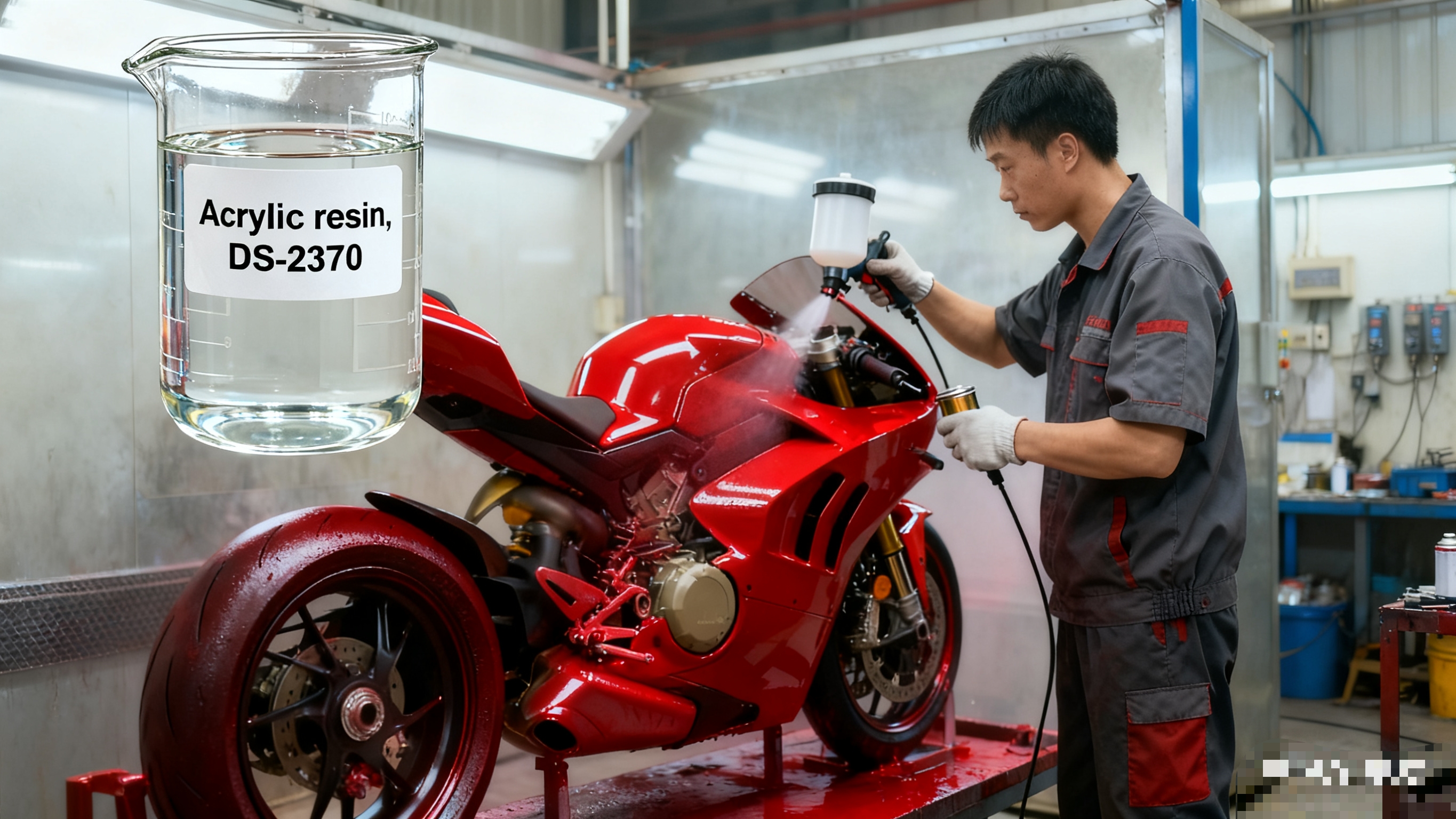
To specify the right Acrylic Resin, you must evaluate four critical dimensions. Avoid relying on generic marketing data sheets. Look for specific testing standards to validate performance claims.
Weatherability & UV Degradation: You must assess QUV testing standards. Standardized weathering tests expose materials to alternating cycles of UV light and moisture. Acrylics inherently resist UV cleavage. The molecular backbone does not break down easily under solar radiation. This structural stability makes them the baseline standard for exterior exposure. Demand specific hours of QUV-A testing before specifying a product.
Chemical and Moisture Resistance: Evaluate the cross-linking density. High cross-linking in thermosetting formulations dictates resistance to industrial solvents, alkalis, and acids. A denser network prevents chemical agents from penetrating the film. Ask suppliers for chemical immersion test results relevant to your specific operational environment.
Adhesion Profiles: Match the formulation exactly to the substrate. Metals, porous concrete, and slick plastics require completely different adhesion strategies. Assess the necessity for adhesion promoters. Sometimes, a modified resin profile saves time by eliminating the need for a separate primer coat.
Compliance & Safety (EHS): Factor in regional VOC regulations immediately. Regulatory bodies heavily restrict solvent emissions. Consider flammability during storage for solvent-based products. Review occupational exposure limits to protect your application crews. Compliance is non-negotiable for modern industrial projects.
Specifiers frequently debate between acrylics, epoxies, and polyurethanes. Each polymer chemistry offers distinct advantages. Choosing incorrectly leads to rapid aesthetic or structural failure.
Epoxy systems offer superior absolute hardness. They provide massive impact resistance and aggressive chemical immersion tolerance. We often see epoxies used for primary containment tanks. However, epoxy formulations suffer from severe UV degradation. They yellow, chalk, and lose gloss quickly when exposed to sunlight. Acrylics offer exceptional color stability and UV resistance. They also provide much faster return-to-service times. The verdict remains clear. Use epoxy for indoor or underground structural durability. Use acrylic for architectural, exterior, and UV-exposed industrial applications.
Both families offer excellent UV stability. Polyurethane generally delivers higher abrasion resistance and greater flexibility. This makes it ideal for high-traffic industrial floors. However, polyurethanes come at a significantly higher cost. They also require stricter moisture control during application. Isocyanate components in polyurethane react violently to high humidity, causing the film to foam or bubble. Acrylics offer a more forgiving application window.
You do not always have to choose just one. Formulators frequently introduce acrylic-polyurethane blends. These hybrid systems balance cost, flexibility, and weatherability. They mitigate the extreme moisture sensitivity of pure polyurethanes while boosting the abrasion resistance of standard acrylics.
Polymer Performance Chart
Performance Metric | Acrylic Resin | Epoxy Resin | Polyurethane Resin |
|---|---|---|---|
UV Stability / Non-Yellowing | Excellent | Poor (Chalks rapidly) | Excellent |
Chemical Immersion | Moderate | Superior | High |
Application Forgiveness | High | Moderate | Low (Moisture sensitive) |
Flexibility | Moderate | Low (Rigid) | High |
Modern formulations extend far beyond basic paints. The versatility of these polymers allows them to dominate several demanding industrial sectors.
Industrial Coatings & Metal Finishes: They dominate automotive OEM clear coats, marine topcoats, and heavy machinery protection. Specifiers focus heavily on barrier properties and long-term gloss retention. A properly applied topcoat prevents underlying corrosion and maintains brand aesthetics for years.
Construction & Roofing: Elastomeric roof coatings rely heavily on these polymers. We highlight the use of 100% acrylic formulations here. They accommodate the massive thermal expansion and contraction of commercial roofing substrates. They stretch during summer heat and remain flexible during winter freezes without cracking.
Industrial Adhesives & Sealants: They excel in structural bonding applications. Manufacturing lines require rapid tack times to maintain production speed. These adhesives offer instant grab and exceptional resistance to environmental sheer forces over time.
Modified Innovations: Formulators constantly push boundaries by blending chemistries.
Silicone-modified acrylics: These bridge the gap for extreme heat resistance, surviving temperature spikes that would incinerate standard polymers.
Epoxy-modified acrylics: These combine the structural hardness of epoxy with dramatically improved weatherability.
Even the most advanced Acrylic Resin fails if applied incorrectly. Implementation carries specific rollout risks. You must enforce strict quality control protocols.
These polymers are entirely unforgiving of poorly prepped surfaces. They will not adhere to oily, dusty, or damp substrates. You must follow standard surface profiling requirements. Use standards like SSPC-SP 1 for solvent cleaning to remove oils. Use SSPC-SP 10 for near-white metal blasting to create an anchor profile. Proper profiling ensures mechanical interlocking between the coating and the substrate.
Environmental conditions dictate success. You must highlight the risks of high humidity or low temperatures on waterborne film formation. If the temperature drops too low, the water evaporates faster than the polymer particles can fuse. This causes "mud-cracking" or blushing, leaving a brittle, powdery finish. For two-component (2K) thermosetting systems, outline strict pot-life constraints. Once you mix the catalyst, the clock starts. Applicators must use the material before it hardens in the spray lines.
Warehouse management directly impacts performance. Emphasize the degradation risks of catalyzed systems. Waterborne variants suffer from freeze-thaw instability. If a bucket of waterborne material freezes in transit, the emulsion breaks permanently. Thawing it will not restore its properties. Enforce strict First-In, First-Out (FIFO) inventory rotation necessities to prevent expired material from reaching the job site.
Specifying the correct industrial polymer requires strict logic. You must systematically prioritize UV exposure, chemical resistance needs, and VOC compliance limits before you ever engage suppliers. Understand whether your operational environment supports the physical drying of thermoplastics or demands the rigid cross-linking of thermosetting systems.
Take concrete next steps to protect your project. Always request detailed Technical Data Sheets (TDS) and Safety Data Sheets (SDS) to verify performance limits. Never procure bulk materials based on paper specifications alone. Initiate physical pilot testing on actual facility substrates under real operational conditions. This final validation step prevents catastrophic failures and ensures your chosen system performs exactly as engineered.
A: Curing times vary drastically by formulation. Thermoplastic systems achieve a touch-dry state rapidly, often within minutes to a few hours, via simple solvent or water evaporation. Conversely, thermosetting systems require a full chemical cure. This process can take several days at ambient temperatures or require mandatory high-temperature baking cycles to cross-link properly.
A: Yes, but you cannot rely on chemical adhesion. You must aggressively mechanically abrade the existing epoxy to create a surface profile. You must also confirm specific recoat windows with the manufacturer to ensure the new layer achieves proper mechanical adhesion to the smooth epoxy surface.
A: Historically, they were not. However, modern advanced synthesis using core-shell morphologies has made waterborne formulations highly competitive. Today, they match solvent-based durability for almost all industrial applications, except for the most extreme, continuous chemical immersion environments.
A: Temperature dictates the Minimum Film Formation Temperature (MFFT). If ambient or surface temperatures fall below the MFFT, the polymer particles cannot coalesce properly as the water or solvent evaporates. This failure to fuse results in a brittle, powdery, or cracked finish that offers zero protection.


