


Views: 0 Author: Site Editor Publish Time: 2026-10-05 Origin: Site


The foundation of any high-performance wood finish lies in its chemical backbone. Solvents and additives play supporting roles, but the true durability and aesthetic appeal of the final product depend entirely on the primary resin. Wood is a dynamic and porous substrate. It breathes, expands, and contracts with seasonal humidity shifts. What happens when you choose the wrong binder? You inevitably face disastrous results. Yellowing surfaces, brittle micro-cracks, poor adhesion, and sluggish curing times will severely bottleneck your factory production.
To combat these specific issues, industrial formulators rely on advanced polymers. Acrylic resin has emerged as the definitive standard for achieving crystal-clear, non-yellowing, and highly durable finishes. This comprehensive guide details the exact criteria needed to evaluate and select the perfect resin for wood coatings. We will compare acrylics against other common chemistries, analyze current industry trends, and introduce top-tier formulation solutions designed to optimize your production line.
Key Takeaways
Clarity and UV Resistance: High-quality acrylic resins prevent the dreaded yellowing effect over time, preserving the natural and organic beauty of the wood grain.
Speed Equals Profit: Opting for formulations with rapid solvent release drastically reduces production bottlenecks, dust contamination, and curing times.
Flexibility is Crucial: The ideal acrylic resin must flex in tandem with the wood's natural dimensional changes to prevent delamination.
Application Versatility: Understanding the nuances between water-based, solvent-based, and specialized industrial acrylics is essential for matching the coating to its final environment.
Before diving into selection criteria, we must understand why acrylics dominate specific segments of the industrial wood finishing market. In commercial applications, these resins are prized for a perfectly balanced profile of optical clarity, weatherability, and processing speed. To truly appreciate their value, let us objectively compare them against other standard polymer chemistries.
A frequent debate among manufacturers is whether to use epoxy or acrylic. Epoxy is legendary for creating thick, glass-like river tables and offers extreme surface hardness. However, when applied as a thin-film protective coating on furniture, epoxy reveals significant flaws.
Standard epoxies are notoriously vulnerable to ultraviolet degradation. When exposed to ambient sunlight, the polymer chains degrade. This results in a distinct amber tint that ruins light-colored woods like birch or maple. Furthermore, epoxy cures into an incredibly rigid structure. Because wood is hygroscopic and constantly shifting, this rigidity often translates to stress fractures. In contrast, aliphatic acrylic resins offer superior ultraviolet resistance. They are engineered to maintain a subtle elasticity that moves naturally with the substrate.
Polyurethane is another heavyweight in the wood finishing arena. It is heavily utilized for high-traffic hardwood floors due to its extreme scuff resistance. Yet, acrylics frequently outperform polyurethanes in two critical manufacturing metrics: optical transparency and drying speed.
Oil-based polyurethanes impart a warm amber glow that darkens as it ages. Acrylics, on the other hand, provide a crystal-clear finish that leaves the underlying wood color entirely unaltered. For high-volume manufacturing lines where time dictates profitability, the rapid drying profile of acrylics allows for much quicker handling, stacking, and shipping of finished goods.
Performance Metric | Acrylic Resin | Epoxy Resin | Polyurethane |
|---|---|---|---|
UV Resistance & Clarity | Excellent, non-yellowing | Poor, yellows over time | Moderate, amber tint |
Flexibility | High, moves with wood | Very rigid, prone to cracking | High, good impact absorption |
Drying Speed | Very Fast | Slow | Moderate to Slow |
Analyzing current market trajectories reveals a distinct shift in how wood coatings are formulated. Regulatory bodies globally are tightening volatile organic compound emission limits. This environmental push forces manufacturers to innovate beyond traditional solvent-heavy mixtures. However, industrial buyers refuse to compromise on line speed or finish quality.
This tension has birthed a surge in demand for high-solids acrylic resins and advanced ultraviolet-curable acrylic systems. These technologies allow facilities to apply fewer coats to achieve the desired film build. Consequently, factories significantly reduce material waste and energy consumption in curing ovens. The industry is moving rapidly toward smart resins that offer the eco-compliance of low-emission formulas combined with aggressive chemical resistance. Formulators are actively upgrading their lines to achieve rapid processing speeds traditionally reserved for heavy industrial epoxies.
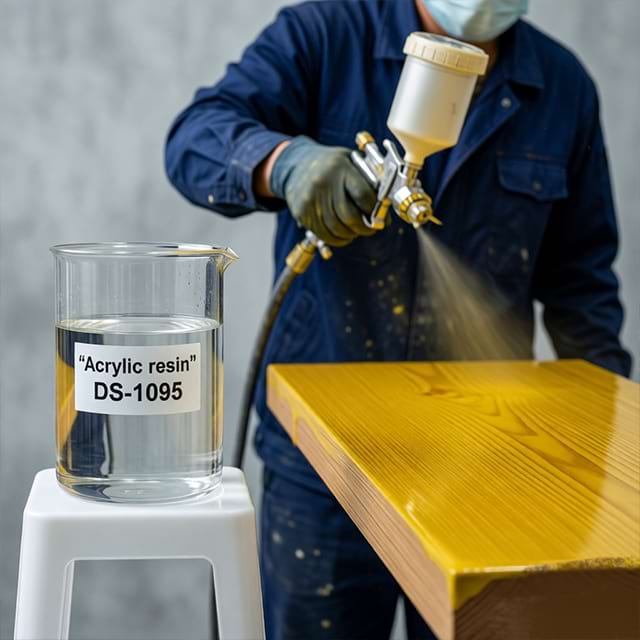
Procuring the right polymer requires a systematic evaluation of its technical specifications. Whether you are formulating a new line of cabinet sprays or searching for a better topcoat, prioritize the following parameters. This checklist serves as a direct selection standard to ensure your final product exceeds industry requirements.
The primary aesthetic goal of a clear coat is to enhance the grain without obscuring it. When reviewing resin data, you must prioritize aliphatic polymer structures. Unlike aromatic compounds, aliphatic acrylics do not absorb the specific ultraviolet wavelengths responsible for polymer breakdown. This chemical trait ensures that clear coats remain virtually invisible for years. White-pigmented finishes will also stay crisp and bright without developing a dingy cast over time.
In the industrial finishing world, slow drying times are a logistical nightmare. Resins that take hours to become tack-free require massive drying racks and consume valuable floor space. Extended wet times also increase the likelihood of airborne dust settling into the film. To minimize downtime, engineers increasingly rely on formulations like the Fast-Drying Acrylic Resin DS-1095. Engineered for rapid solvent release and high initial hardness, these specialized polymers allow operators to sand between coats faster. This instantly pushes products to the packaging department in a fraction of the traditional time.
A finish is completely useless if it peels away from the substrate. Wood presents a unique challenge due to its uneven cellular structure and natural oils. The chosen resin must possess exceptional wetting properties. It needs to flow smoothly and penetrate deep into the wood fibers before cross-linking. Deep penetration creates a strong mechanical interlocking bond. This prevents the coating from chipping when the surface inevitably takes a physical impact.
Imagine a solid oak dining table in a humid summer versus a dry winter. The wood expands and shrinks noticeably. If the protective coating is too brittle, this dimensional movement will trigger micro-cracking. Eventually, moisture will seep in and destroy the finish entirely. The flexibility of an acrylic resin is governed by its glass transition temperature. A meticulously balanced temperature profile provides enough elasticity to stretch without snapping. Simultaneously, it remains hard enough to prevent the surface from feeling sticky at room temperature.
Acrylic polymers are supplied in a carrier medium, typically water or organic solvents. Your choice dictates the manufacturing process, environmental compliance, and specific performance attributes of the final wood finish.
Driven by strict environmental regulations, water-based acrylic emulsions have seen massive adoption. By utilizing water as the primary solvent, manufacturers drastically reduce harmful factory emissions and eliminate major fire hazards. Historically, critics argued that water-based systems lacked the warmth and durability of traditional solvents. Today, modern polymer engineering has shattered that myth. Advanced water-based acrylics now offer exceptional block resistance, hardness, and clarity. They are now a staple for architectural woodwork and indoor furniture.
Despite the eco-friendly push, solvent-based systems remain indispensable for specific industrial challenges. They offer a highly controllable evaporation rate. This is a massive advantage in humid climates where water simply refuses to evaporate. Furthermore, solvent-based acrylics are unparalleled when trying to achieve extreme mirror-like high-gloss finishes. The solvents allow the resin to level flawlessly over the substrate before setting. They also penetrate dense and oily exotic woods far better than their water-based counterparts.
A quick scan of professional woodworking forums and industrial finishing networks reveals recurring frustrations. Selecting a highly engineered resin can instantly solve these daily manufacturing headaches.
If you have ever sprayed a clear coat and watched tiny bubbles refuse to pop, you know the frustration of trapped air. This defect usually stems from a resin with improper viscosity or poor defoaming compatibility. A premium acrylic resin is formulated with optimized rheology. It remains open just long enough for mechanically introduced air to rise to the surface and burst. The film lays down perfectly flat before skinning over.
A frequent consumer critique is that modern synthetic finishes make beautiful wood look like cheap plastic. This happens when a high-build resin fails to contour to the organic grain. To combat this, formulators select low-viscosity acrylics that can be easily modified with matting agents. This creates gorgeous open-pore, natural matte, or satin finishes. The substrate is fully protected while maintaining its tactile and organic warmth.
Certain species like cedar, redwood, and oak are packed with water-soluble extractives called tannins. When coated with standard water-based finishes, these tannins migrate upward. They leave ugly brown or yellow stains on the cured surface. Specialized acrylic resins are engineered with stain-blocking ionic charges. They rapidly cross-link at the substrate level, effectively trapping the tannins and preventing them from ruining the pristine topcoat.
Balancing extreme clarity, flexibility, and chemical resistance while demanding faster production speeds is a complex procurement puzzle. For manufacturers seeking a streamlined and high-performance upgrade, integrating high-hardness acrylic formulations is the most effective path forward.
When factory throughput and uncompromising quality are your primary objectives, specific resin parameters stand out. High-hardness formulations are meticulously engineered to address the most critical bottleneck in industrial environments, which is curing time. By facilitating lightning-fast solvent release, coated wooden components can be handled, stacked, and moved down the line much faster.
Beyond sheer speed, physical integrity remains intact. Formulators achieve exceptional immediate surface hardness to resist assembly-line abrasion. Meanwhile, the brilliant, non-yellowing transparency expected from top-tier aliphatic polymers is maintained. This dual action directly increases output volume while slashing labor costs per unit.
Because of its robust and adaptable performance profile, this class of resin excels across several demanding manufacturing sectors. High-end solid wood furniture requires optical clarity to showcase intricate natural wood grains without risking micro-cracks. Industrial wooden doors demand rapid processing and excellent block resistance so stacked doors do not stick together during transit. Cabinetry and millwork require an impermeable barrier against household chemicals, steam, and moisture. Finally, musical instruments need a thin, highly flexible, yet protective layer that will not dampen acoustic resonance.
Identifying the perfect polymer is only half the battle. Partnering with a reliable manufacturer ensures your production line never stops. B2B buyers must implement a rigorous evaluation protocol before signing a bulk supply contract.
Vendor evaluation always begins with the technical data sheet. This document provides the empirical data required to predict how the resin will behave on your line. Scrutinize the solid content to gauge film build. Check the viscosity for spray compatibility. Analyze the acid value and glass transition temperature to confirm flexibility. Once the numbers align, request liquid samples. Conduct in-house laboratory testing on your specific wood substrates to verify adhesion, clarity, and true drying times under your factory's unique ambient conditions.
In industrial coating manufacturing, inconsistency is incredibly expensive. A minor fluctuation in a resin's molecular weight from one batch to the next can cause a catastrophic failure on the finishing line. When sourcing raw materials, verify the supplier's quality assurance infrastructure. Demand certificates of analysis for every shipment. This ensures the polymer remains strictly within the specified tolerance ranges, guaranteeing that your finish performs predictably every single time.
Selecting the optimal acrylic resin is a critical business decision. It dictates the success, aesthetic appeal, and longevity of your final wood finish. By carefully balancing optical clarity, dimensional flexibility, chemical resistance, and drying speed, manufacturers can formulate coatings that truly elevate and protect wooden substrates.
Settling for inferior or mismatched resins inevitably leads to costly production inefficiencies and devastating coating failures in the field. For facilities determined to optimize their production lines without sacrificing an ounce of quality, upgrading to advanced polymer formulations is essential. We encourage you to explore the specialized solutions at Tanto HK. Test their high-hardness, fast-drying acrylic resins to see the difference firsthand. Contact their technical sales team today to request product samples, and take the definitive step toward a more profitable and durable wood coating process.
Yes, acrylic resins can absolutely be applied over previously painted or stained wood surfaces, provided you follow strict surface preparation protocols. The secret to a flawless application is achieving a strong mechanical bond. If the existing finish is a high-gloss polyurethane or an old oil-based paint, it must be thoroughly degreased and sanded with 150 to 220 grit sandpaper to create a rough tooth for the new coating to grip.
Compatibility testing is also highly recommended. High-quality acrylics exhibit excellent adhesion to older acrylics and water-based stains. However, applying a strong solvent-based acrylic over a weak and un-crosslinked water-based paint can cause the underlying layer to wrinkle. Always perform a quick cross-hatch adhesion test on an inconspicuous area before coating the entire piece.
It is vital to distinguish between drying time and curing time. Drying refers to the evaporation of solvents, leaving the surface dry to the touch. With advanced industrial formulations, this touch-dry phase can happen in as little as 15 to 30 minutes in a climate-controlled setting.
Full chemical curing is the process where the polymer chains fully entangle to reach their maximum physical hardness and chemical resistance. This takes significantly longer. While a coated cabinet door may be ready for gentle handling within a few hours, the finish may require anywhere from 3 to 7 days to fully cure. During this window, the coating remains slightly vulnerable to heavy impacts and harsh chemical spills.
In its fully cured and solid state, standard acrylic polymer is generally inert and non-toxic. However, being generally safe does not meet industrial compliance standards for direct food contact. Standard wood formulations often include leveling agents, defoamers, and residual solvents that are not rated for food safety.
If you are formulating finishes specifically for cutting boards, butcher blocks, or wooden utensils, you must source resins and additives that strictly comply with regional food safety regulations. These require rigorous migration testing to ensure no chemicals leach into food. For standard cutting boards, many prefer natural mineral oils. If a hard film is necessary, specialized food-grade acrylics are absolutely required.
Applying a premium acrylic coating significantly delays weathering and protects against rot, but it is not a permanent standalone cure. Wood rot is driven by fungi, which require moisture to survive. Acrylic resins are fantastic for outdoor use because their ultraviolet-stable structure prevents them from chalking in the sun, and they form a highly water-resistant barrier against rain.
However, if the wood is not completely encapsulated on all six sides, moisture will eventually find a way in. Furthermore, the resin must have a balanced flexibility to move with the wood during seasonal temperature swings. If the coating is too rigid, micro-cracks will form. This allows water to penetrate and become trapped beneath the film, ultimately accelerating the rotting process. Proper encapsulation and routine maintenance are essential for outdoor longevity.
A cloudy or milky appearance in a clear wood finish is commonly known as blushing. This defect occurs when moisture becomes trapped within the coating during the drying process. It usually happens when spraying solvent-based acrylics in environments with high humidity or rapidly dropping temperatures.
To fix a blushing issue, you can lightly spray a mist coat of pure retarder solvent over the affected area. This temporarily re-wets the surface, allowing the trapped moisture to escape before the film seals again. If the coating has already fully cured, you will need to sand the surface down past the cloudy layer and apply a fresh topcoat in a controlled, low-humidity environment.
Yes, solvent-based acrylic resins are exceptionally well-suited for high-gloss applications and can be polished to a mirror-like finish. Because acrylics dry hard and do not remain gummy, they respond beautifully to mechanical buffing and polishing compounds.
To achieve a flawless high-gloss finish, the acrylic coating must be allowed to fully cure for several days. Once cured, the surface is wet-sanded with progressively finer sandpaper, typically moving from 1000 grit up to 3000 grit. Finally, using a rotary buffer with a fine polishing compound will remove the microscopic sanding scratches, revealing a brilliant and crystal-clear gloss.


